


Retail Violence Is Changing Shape.
Security Has to Change With It.
Retail violence in 2026 has not simply been on the rise. It has evolved. The 2026 Impact of Retail Theft & Violence report from the National Retail Federation (NRF) and the Loss Prevention Research Council (LPRC) shows that violence tied to shoplifting actually dropped last year, while guest-related violence and disruptive incidents climbed.
The good news is that retailers who made investments in deterrence saw tangible results where they focused. The bad or unsurprising news is that threats outside that focus grew. For store operators, the takeaway is that security must cover the whole store and focus for the whole day, not only the moment someone heads for the door with merchandise.
I personally witnessed this earlier this year. I was shopping at a national retail store; the security guard went on a break and then the store was rushed by half a dozen opportunist shop lifters who had obviously been monitoring when the guard takes a break.
Where violence is increasing
The fastest-growing incidents do not start with a theft. Asked which violence-related events happened more often over the past year, retailers reported:
Event type | % Retailers reporting that it happened more frequently YoY |
Business disruption involving individuals known to be unhoused | 43% |
Guest-related violence | 42% |
Employee travel safety concerns | 35% |
Theft or violence involving individuals known to be unhoused | 33% |
Violence during a crime, including shoplifting | 29% |
Employee-related violence | 24% |
The report also notes that the threat landscape is not just the store itself. Demonstrations, civil unrest and domestic disputes can easily spill onto a sales floor, and some individuals target brands or executives over political or ideological grievances.
These can take the form of a confrontation at the register, a person in crisis at the entrance or an argument that follows an employee into the parking lot. Locked cases and anti-theft tags are of no assistance in these cases.
Theft-related violence fell, and that is the case for deterrence
Where retailers concentrated their defenses, violence came down. Retailers tracking these incidents, threats or acts of violence against employees during a shoplifting or theft event fell 20.7% from 2024 to 2025, after rising 41.8% and 16.6% in the two prior periods. Incidents involving the threat, display or use of a weapon during a theft fell 9.7%, after increases of 39% and 16.4%.
The share of retailers saying shoplifters are more aggressive than the previous year, dropped from 73% in 2024 to 51% in 2025 and 40% in 2026. Average shoplifting incidents fell 12.4%, which was the first decrease in a number of years.
Retailers credit their own actions. Thirty-one percent point to changes in store defense strategy, and 71% of those seeing reductions in organized theft attribute them to employee training, better technology and stronger security measures.
Two cautions keep this in perspective. Retail theft activity remains well above pre-pandemic levels, and 40% of retailers still see shoplifters as more aggressive than last year. A leveling off is progress, not a reason to pull back escalated security measures.
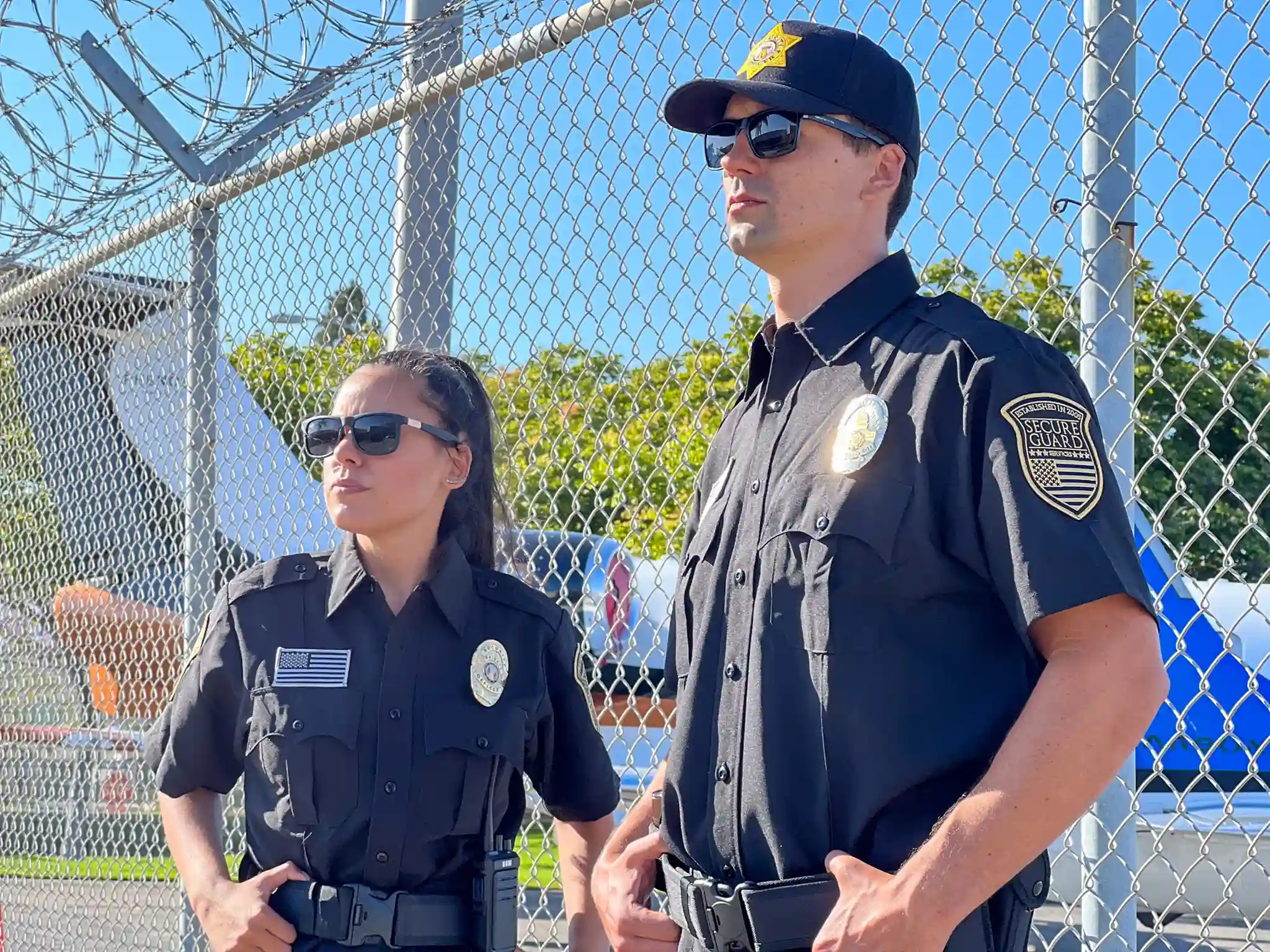
Retailers are also narrowing who is allowed to confront a suspect. Forty percent now authorize no employee to approach or stop a suspected shoplifter. The share authorizing contract security personnel to do so has risen from 6% in 2024 to 9% in 2025 and 11% in 2026, a sign that confrontation is being handed to trained professionals rather than store associates.
The cost to people and operations
Violence is now a workforce problem as much as a loss problem. Thirty-seven percent of retailers say the threat or existence of violence-related theft has created hiring and retention challenges, up from 35% last year. Eighty-one percent say it has required more employee training on workplace violence.
Retailers are responding with structure. Over the past year, 72% increased management training on handling threats, 65% increased employee violence-prevention training and 61% expanded risk intelligence tools that flag potential threats before they arrive.
When those measures fall short, the response gets more drastic. In 2025, 26% of retailers closed store locations and 20% reduced store hours because of theft, violence and crime in surrounding areas, and similar shares plan to do the same this year. Thirty percent say violence-related theft has forced measures that hurt the customer experience, though that is down from nearly half last year.
What comprehensive security looks like
The NRF report is on point regarding the complexities of retail security. Effective security is layered and tailored to each retail segment and location. Retailers’ plans for the next 18 months reflect that, with 55% planning to expand perimeter measures such as lighting, cameras and license plate readers, and 52% each planning to expand interior measures and store or employee specific safety tools such as panic buttons and remote CCTV.
A comprehensive program connects five layers:
- Perimeter. Lighting, cameras and parking lot visibility, because many incidents begin before a customer reaches the door.
- Interior. Camera coverage, store layout and sightlines that let staff see problems developing.
- People. Trained, visible officers at the locations and hours where risk is highest, with clear rules on who approaches a suspect and who does not.
- Process. Defined steps for identifying, reporting and assessing threats. Roughly half of retailers increased process capabilities last year.
- Data. Consistent incident reporting. Sixty-three percent of retailers report fewer than half of theft incidents to law enforcement, which leaves decisions and prosecutions working from incomplete records.
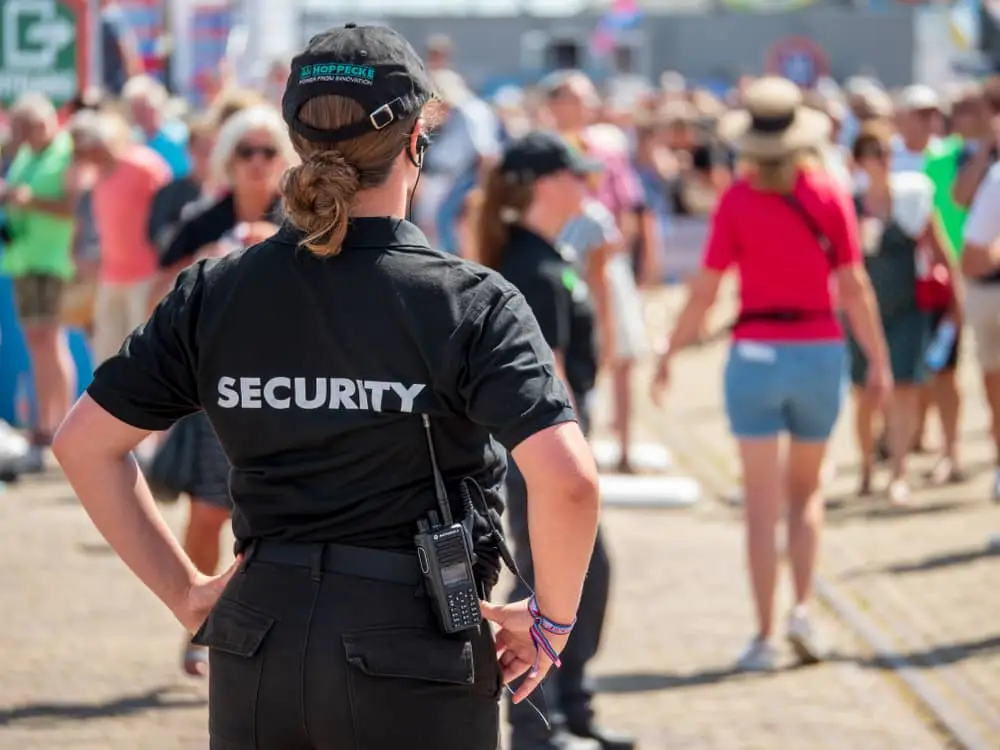
Whilst technology records an incident, a trained officer can often prevent one. Cameras, although a useful monitoring tool, they cannot de-escalate an argument at the service desk or walk an employee to their car after close.
That human layer is still thin. In 2025, 80% of retailers had uniformed security or law enforcement in fewer than a quarter of their stores, and only 2% had it in half or more. Budgets for third-party security are mixed, with 27% of retailers increasing them and 22% cutting them. When coverage is targeted this tightly, every post has to be the right post, staffed reliably, every shift in order to ensure maximum efficiency and effectiveness of security resources.
How Guard Services USA supports retailers
Guard Services USA provides contract security officers to retail locations nationwide, built for the targeted, high-risk coverage the data describes.
- Reliable coverage. 99%+ same-day shift fulfillment, so a high-risk post is not left empty when an officer calls out.
- Visibility. The Guard Check-in app provides GPS check-in, photo verification and real-time client feedback, so loss prevention teams can confirm coverage instead of assuming it.
- One partner for the physical layer. Our affiliate company, Facilities USA, provides facility services, which lets retailers coordinate site upkeep and security coverage through one relationship.
To discuss coverage for your highest-risk locations, contact Guard Services USA.
Source
National Retail Federation, Loss Prevention Research Council and Sensormatic Solutions, 2026 The Impact of Retail Theft & Violence. Online survey of senior loss prevention and security executives at 66 companies representing 143 brands, conducted February to April 2026. Year-over-year incident changes reflect retailers that tracked each measure.