
Visit Our Sister Company


When the Network Goes Dark
How Enterprise Retail Security Responds
Most enterprise retail security programs are built on a simple assumption: communication systems will work when they are needed the most. Radios will connect. Mobile apps will update in real time. Supervisors will use these tools to redirect resources.
This isn’t always the case. Networks go offline due to infrastructure strain, civil activity, or localized outages. When systems fail, the effectiveness of your security program depends less on technology and more on whether guards on the ground have a plan to move forward without it.
The Need for a Communications Blackout Protocol for Retail Security
Data from 2025 shows that 84% of businesses reported an increase in network outages over a two-year period.
A communication blackout protocol for retail security is a predefined set of guard-level actions that governs how security personnel maintain safety, control, and reporting when radios, mobile apps, or network systems fail.
This is the retail security guard communications protocol that emergency teams rely on when digital tools are unavailable. It replaces technology with clear decision authority, physical check-in procedures, and scenario-based responses that can be reviewed and executed while under pressure.

Why Emergency Communication Failures Create Operational Risk
During large-scale events, communication failures are common, whether they are due to infrastructure outages, cellular congestion, or network instability.
The risk is not just the loss of communication, but the loss of coordination, which can compromise safety and security if no plan is in place.

Most enterprise emergency procedures assume the following:
- Guards can communicate and flag issues in real time.
- Supervisors can redirect resources instantly.
- Incident reporting systems remain active and uninterrupted.
When those assumptions no longer hold true, security vulnerabilities appear quickly. Guards default to individual judgment, which varies by experience level, training, and clarity of expectations. Not to mention, they have no way of communicating their varied judgment calls
For organizations operating across multiple locations, an inconsistent response is the real security breach.
In-Store Security Guard Protocol During Communications Loss
In-store retail security guards are responsible for maintaining customer flow, protecting high-value assets, and escalating incidents using pre-defined non-digital protocols when communications fail.
Key responsibilities remain the same whether or not a network failure is present:
- Maintaining clear entrance and exit points to prevent bottlenecks
- Holding posts near high-value merchandise or known high-risk zones
- Monitoring customer behavior for escalation triggers without relying on radio direction
Escalation thresholds must be defined in advance. This could mean clear direction on contacting store leadership or initiating physical deterrence measures.
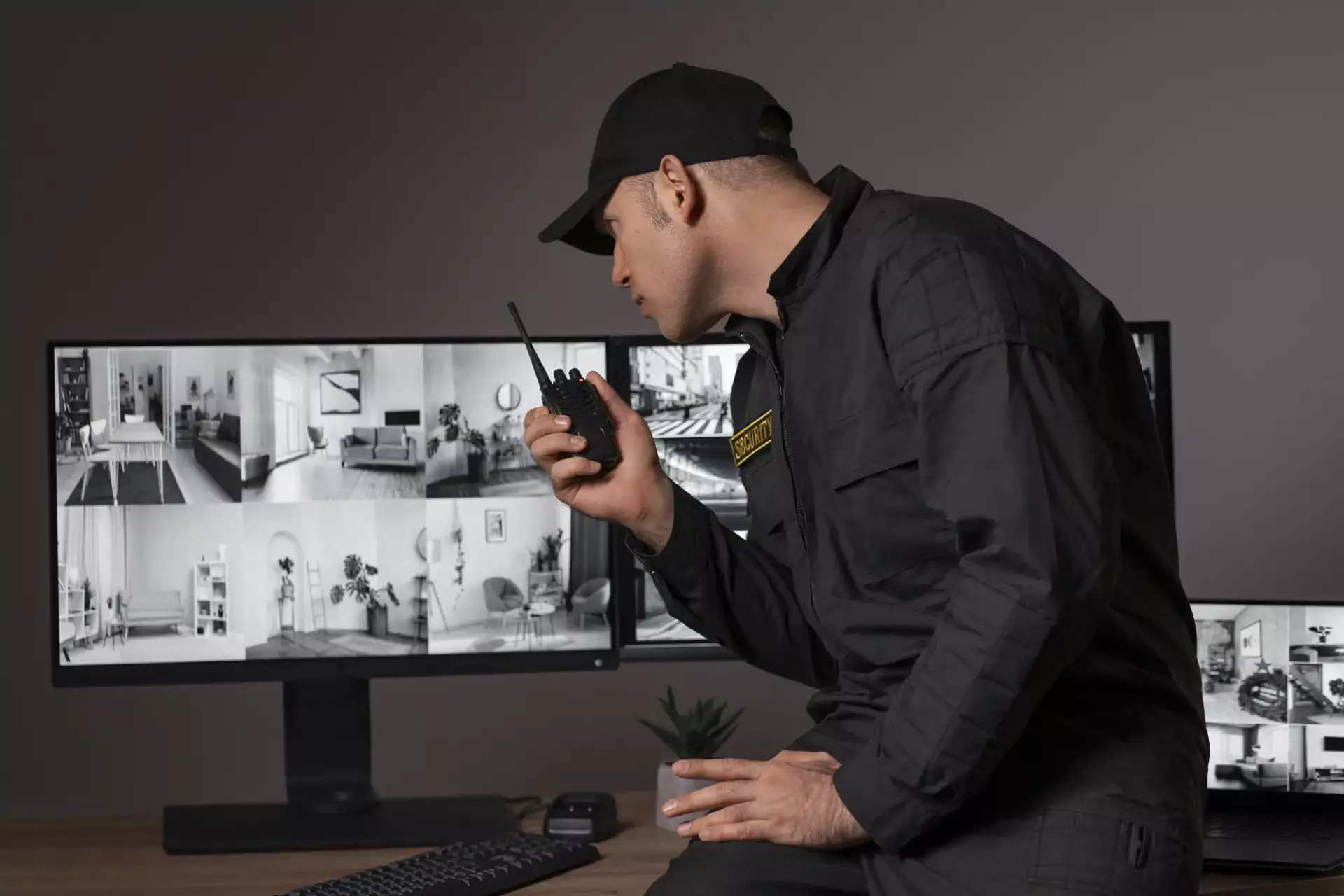
Parking Lot Security Protocol During Communications Failure
Parking lot security guards are responsible for perimeter control, vehicle flow management, and responding to theft or suspicious activity when digital communication is unavailable.
Exterior environments introduce different risks. Visibility is lower, response times are longer, and incidents can escalate without immediate support.
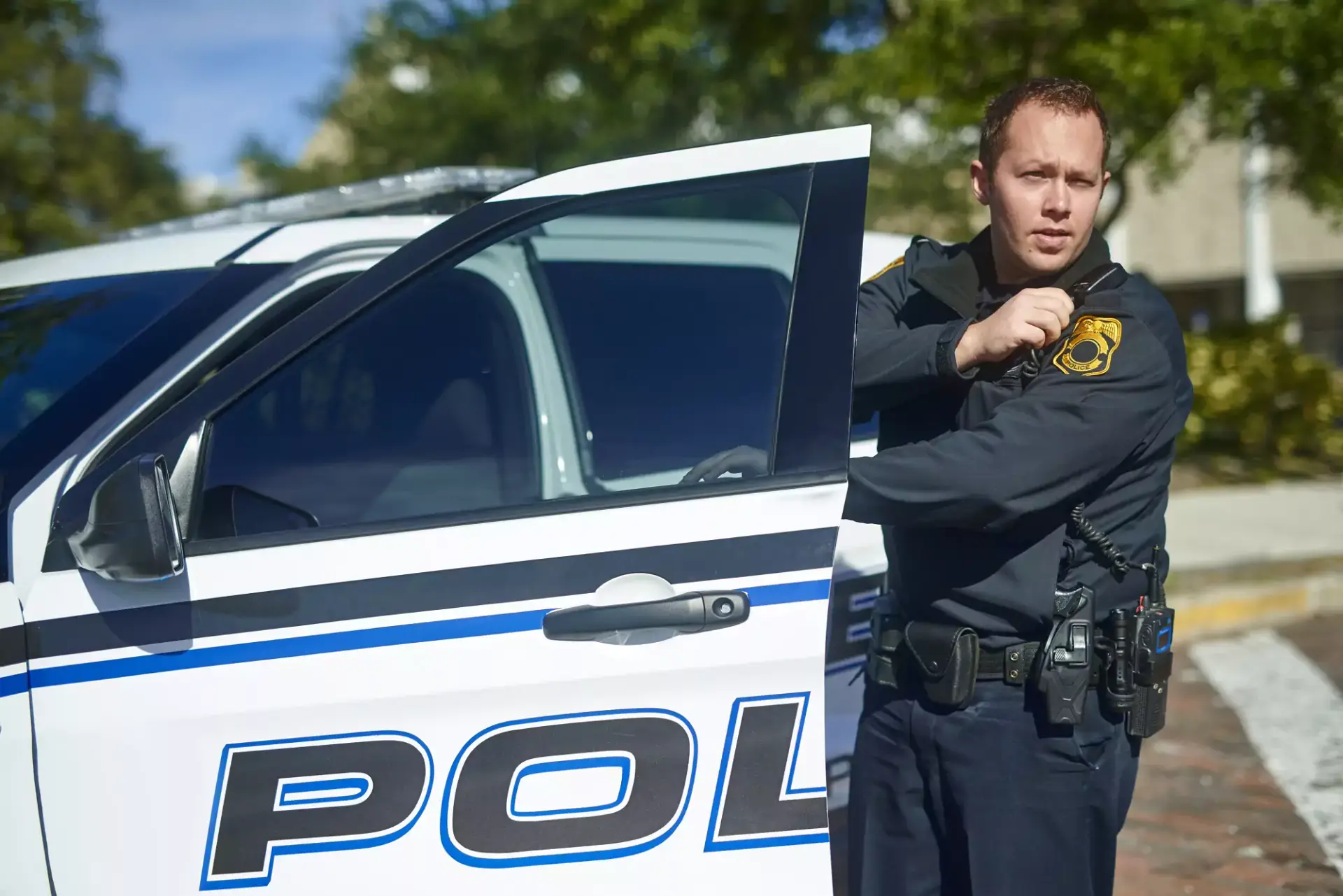
Parking lot duty may include the following:
- Monitoring vehicle entry and exit points and limiting entry if needed
- Maintaining a visible presence throughout consistent patrol patterns
- Identifying and responding to loitering, unruly driving, or suspicious vehicle activity
In a communication blackout, parking lot guards operate with total independence. They must make real-time decisions about when to intervene and escalate to law enforcement.
Predefined escalation protocols, such as attempted forced entry or coordinated group misconduct, are critical.
Roving Patrol Protocol When Networks Go Dark
Roving patrol teams are responsible for maintaining cross-location visibility, supporting static posts, and executing predefined physical check-in routes when communications systems fail.
When networks go dark, roving units become the primary link between locations. Their responsibility changes to conducting scheduled check-ins with in-store and perimeter guards. They also relay critical information between sites and provide backup support where needed.
For example, a patrol unit covering a retail corridor may move between three to five locations on a fixed loop, ensuring each site maintains operational continuity.
Patrol officers need to know when they can reallocate themselves without supervisor approval. It is also invaluable for an on-site guard to know that a rover representative will arrive on a predictable scheduled cycle when incidents become out of control or dangerous.
Armed Guard and Off-Duty Officers: Escalation without Communications
Armed guards and Off-Duty Officers (ODO) are responsible for managing high-risk incidents, making independent escalation decisions, and applying use-of-force protocols when communications are unavailable.
An ODO in a security context is a sworn law enforcement officer who works in a private security capacity off duty, typically with enhanced authority and training in higher-risk environments. In network-outage scenarios, the margin for error narrows.
Policies and procedures for ODOs include the clear use-of-force guidelines that do not rely on supervisor communication, defined thresholds for contacting law enforcement, and instructions on when to hold a post or intervene.
For example, an armed guard at a crowded urban location may be instructed to hold position unless a direct threat emerges. These protocols should be specific, reducing hesitation in high-risk situations.
Why Scenario-Based Training Matters More Than Policy Documents
Scenario-based security training prepares guards to execute decisions under pressure, while policy documents primarily define expectations in theory.
Most enterprise security programs have documentation. Fewer have operationalized that documentation into repeatable behavior. That’s where scenario-based training comes in.
Scenario-based training typically includes:
- Realistic examples of communications failure
- Role-specific decision protocol when under pressure
- Reinforcement of when to escalate incidents to the authorities
For example, a training scenario may simulate a full communications outage during peak hours, requiring guards to operate for 30 minutes without digital support.
This approach builds muscle memory. Guards are not recalling policy but instead executing practiced responses.
How Enterprise Retailers Should Prepare for Communications Disruption
Enterprise retailers should include communications disruption in standard training materials with structured protocols and validation exercises across all locations.
- Pre-Disruption Protocol: Define role-specific responsibilities for in-store, parking lot, patrol, and armed personnel. They should be simple, direct, and actionable.
- Tabletop Exercises: Run exercises with operations leaders to test assumptions and identify gaps. Focus specifically on communications loss scenarios, not general emergencies.
- Guard-Level Scenario Training: Translate protocols into field execution through scenario-based training. Reinforce expectations consistently across all locations.
Modern platforms, including GPS-verified guard check-ins, photo confirmation, and real-time logging, improve visibility. But the underlying protocol must function without them.
A Geopolitical View: Why Communications Disruption Is a Planning Assumption
Communications disruption is increasingly common in high-density metros and during periods of geopolitical or social tension. This happens because of network congestion, infrastructure vulnerabilities in dense populations, and increased reliance on cloud-based systems.
For enterprise brands with global supply chains or distributed operations across the US, Canada, and Puerto Rico, the question is not if disruption will occur, but when and where.
ACLED offers data for reference for periods of political unrest during election cycles, which can lead to predictable spikes in network disruptions. Planning accordingly for situations like these reduces operational volatility and improves consistency across the network.

Frequently Asked Questions
What should retail security guards do if communications systems fail during an emergency?
Security guards should follow predetermined steps:
- Maintain visible presence.
- Prioritize customer safety and asset protection.
- Follow pre-established escalation thresholds.
- Use physical check-ins or time-based reporting methods.
How do armed and unarmed guards differ in their emergency response?
Armed and unarmed guards differ primarily in their authority, escalation thresholds, and responsibility during high-risk incidents. Armed guards and ODOs operate with higher responsibility for escalation and use-of-force decisions, while unarmed guards focus on deterrence, observation, and controlled escalation. Protocols for armed personnel must be explicit and clear.
How should enterprise retailers prepare security protocols for communications disruptions?
Enterprise retailers should prepare for communications disruptions by building clear, role-specific protocols that function without reliance on digital systems. Retailers should develop role-specific protocols, conduct tabletop exercises, and implement scenario-based training to ensure guards can operate effectively without digital communication.
What is an off-duty officer (ODO) in commercial security?
An off-duty officer (ODO) is a sworn law enforcement professional working in a private security capacity. An Off-Duty Officer (ODO) is a sworn law enforcement officer working in a private security role while off duty, providing advanced training, authority, and response capability in higher-risk environments.
What does scenario-based security guard training involve?
Scenario-based security guard training involves practicing real-world situations so guards can respond effectively under pressure. Scenario-based training involves simulated real-world situations in which guards practice responding to unexpected outages to improve decision-making under pressure. They build muscle memory so when the unexpected occurs, the guards are prepared with practiced reactions.
Preparing for the Unexpected During Network Outages
Communications systems will fail at some point. The effectiveness of a security program depends on what happens next.
Enterprise security programs that have not conducted training on communications loss in the past 12 months have a gap in their policies and procedures. A qualified guard services partner can facilitate that training program, translating policy into execution before facing an inevitable network outage.