
The Hidden Costs of Security
Vendor Fragmentation in Multi-Location Retail
Introduction
Running multiple retail businesses in the USA market is not an easy task. Customers expect safe shopping experiences, and employees rely on a secure workplace, however many retailers unknowingly disrupt their own security through a modern organisation called security vendor fragmentation.
In retail, data fragmentation happens when data from different parts of your business are scattered across multiple systems, which can create a headache for retailers. Local security options may look better up front, but in reality, there is a hidden cost that causes real disturbance over time. In 2023, retail cybercrime lost $12 billion due to security system vulnerabilities. In this blog, you will hear the full explanation of the hidden costs of security vendor fragmentation in multi-location retail chains.
Understanding The Real Cost Beyond The Hourly Rate
In today’s world of hyper-digital, many retail companies rely on cheap vendors. It is common for local vendors to offer their services at low cost, however the problems start there. Many retail owners focus on the lowest hourly rate from the security guard vendor companies. So when your vendor’s contract is up for renewal, the retailer may find some cheap options that are supposedly 20–30% less expensive, however it is rare that they receive the same level of service at a lower budget. Finance departments may covet and switch towards cheaper options, however they often realize that it’s not as simple as it looks. Mostly in every contract, Expol MDR (Managed Detection and Response Services) includes all the monitoring across all your environments. Always think and understand the cost of collecting and processing your data. It is important to be aware that many local vendors who offer hourly services, charge separately for each data source, which includes: Cloud Logs Endpoint data for Network monitoring. In this way, when they charge separately for each data source, suddenly your savings go from 30% to 15%. Changing your security company is not a simple change to your internet connections. You’re moving your years of data and customer integration.

Why Fragmentation Feels Safe?
In today’s digital world, where people are advanced, threats are also becoming more advanced. Many companies still believe in using different retail security guard companies for different store locations or systems, which they feel is a safer choice. A fragmented security system uses separate tools for endpoint protection, network monitoring, and email filtering. These tools may seem safe and good, but using different systems doesn’t work fully together. This causes a serious gap in your business protection, slowing the business growth.
Here are reasons why it feels safe:
Local Relationships
Most retailers, business owners, and managers choose local vendors due to their long-term association. When measuring security guard services for retail stores the majority of owners rely on local partners, as they perceive communication to be easier and physical support is close by. This approach seems comfortable, but it causes a security gap as different security standards are used at different locations.
Perceived Leverage
Some retailers that work with different vendors feel that leveraging that puts them in a strong place to negotiate. They feel that if the company does not perform well, they can easily move to other companies. This creates a sense of control and flexibility with the retail owner and security guard vendor companies. This competition between the vendors can drive the price down and can cause complexity in the security system. The offset of this standpoint is that if you drive the price too low, it can have an adverse affect on the quality of service that you are provided with.
Legacy Contracts
Many security guard services for retail stores were created years ago when retail accidents were simple and mostly involved shoplifting or minor disturbance. At that time, the risk level was lower, and the basic guard presence was the bare minimum. With the fast-moving world, companies expanded into new markets. Each location needs security to meet local needs.
Hidden Cost #1: Inconsistent Safety Across Markets
One of the most significant risk factors of fragmentation in the multi-location security program is different training levels and standards. If the guards undergo the same training, they will be coached to have the same observations and fundamentally react the same at each unpleasant situation.
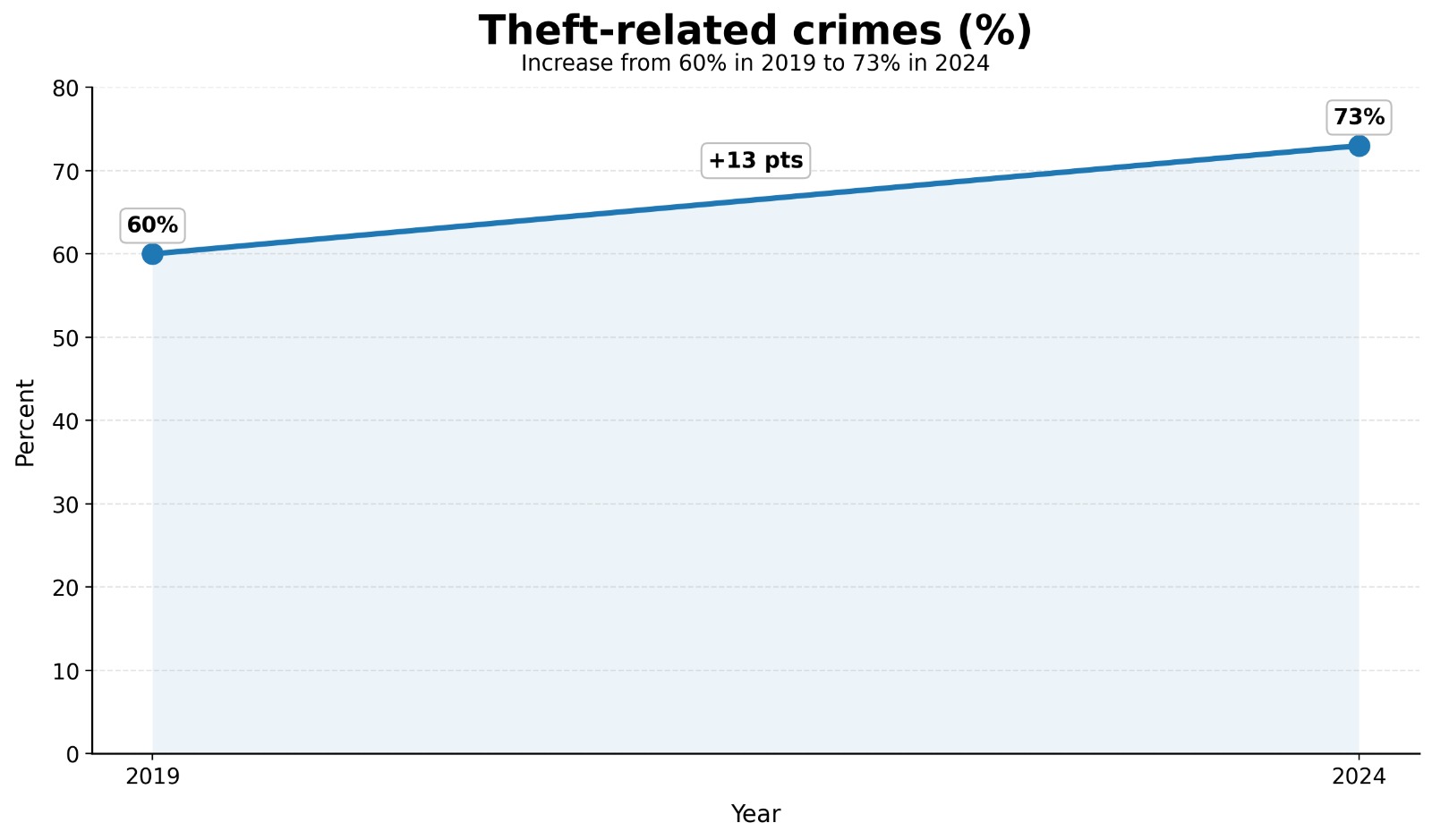
Fragmented security programs can lead to a rise in violence and theft-related crimes. In fact, 73% of respondents say shoplifters are more violent than a year ago, and 91% say they are more violent than in 2019. A fragmented security system is not designed for modern needs.
Different training protocols: Each security company has its own training process, and that creates coordination between the guards. But if they do no have the same sense and observation, it can cause serious issues.
De-escalation issues: unbalanced training coordination also affects the way security officers handle situations that escalate. Without the right skills, small accidents turn into big conflicts. This creates fear between employees and customers and also affects the reputation of the business in the market.
Hidden Cost #2: Shrink & Escalation

Shrinkage is the measurement of losses calculated by a retailer during a specific period of time, categorized across various means of retail loss. This year’s study found that the average shrink rate in FY 2022 increased to 1.6%, up from 1.4% in FY 2021 and in line with shrink rates seen in 2020 and 2019. When taken as a percentage of total retail sales in 2022, that shrink represents $112.1 billion in losses, up from $93.9 billion in 2021. Organised retail crime groups are always looking for the security weakness of the business. They always test the security system of the store and observe the pattern. If your third-party security
guards’ retail coverage differs by region, criminals will find the gaps. ORC groups observe the security systems of different retail shops and exploit gaps in security protocols. A fragmented retail shrink prevention model makes it difficult to present a standardised deterrence plan.
Increased theft: When ORC detects uniformity in security measures, they can
easily exploit these weaknesses. They take advantage of the pattern of security across different stores. Escalation of incidents: When the security is not standardised, a small theft can escalate into a serious situation. Weapon involvement in retail theft incidents rose by 39% from 2022 to 2023.
Hidden Cost #3: Executive Time & Operational Noise
Research shows that 87% of grocery associates surveyed said that new technologies could improve their jobs. Fragmentation does not just impact the stores; it also gives a tough time to the leaders of business. Time is a real cost that is wasted on vendor coordination: when a business manages security through many vendors, it can be a time burn coordinating across locations; each company has its own reporting system and different methods of communication.
Operational inefficiencies: Leadership comes with responsibilities. With so many vendors to manage, important tasks can get sidelined. In fragmentation security leadership spends their time chasing the reports instead of focusing on operational improvements.
Hidden Cost #4: Data Blind Spots
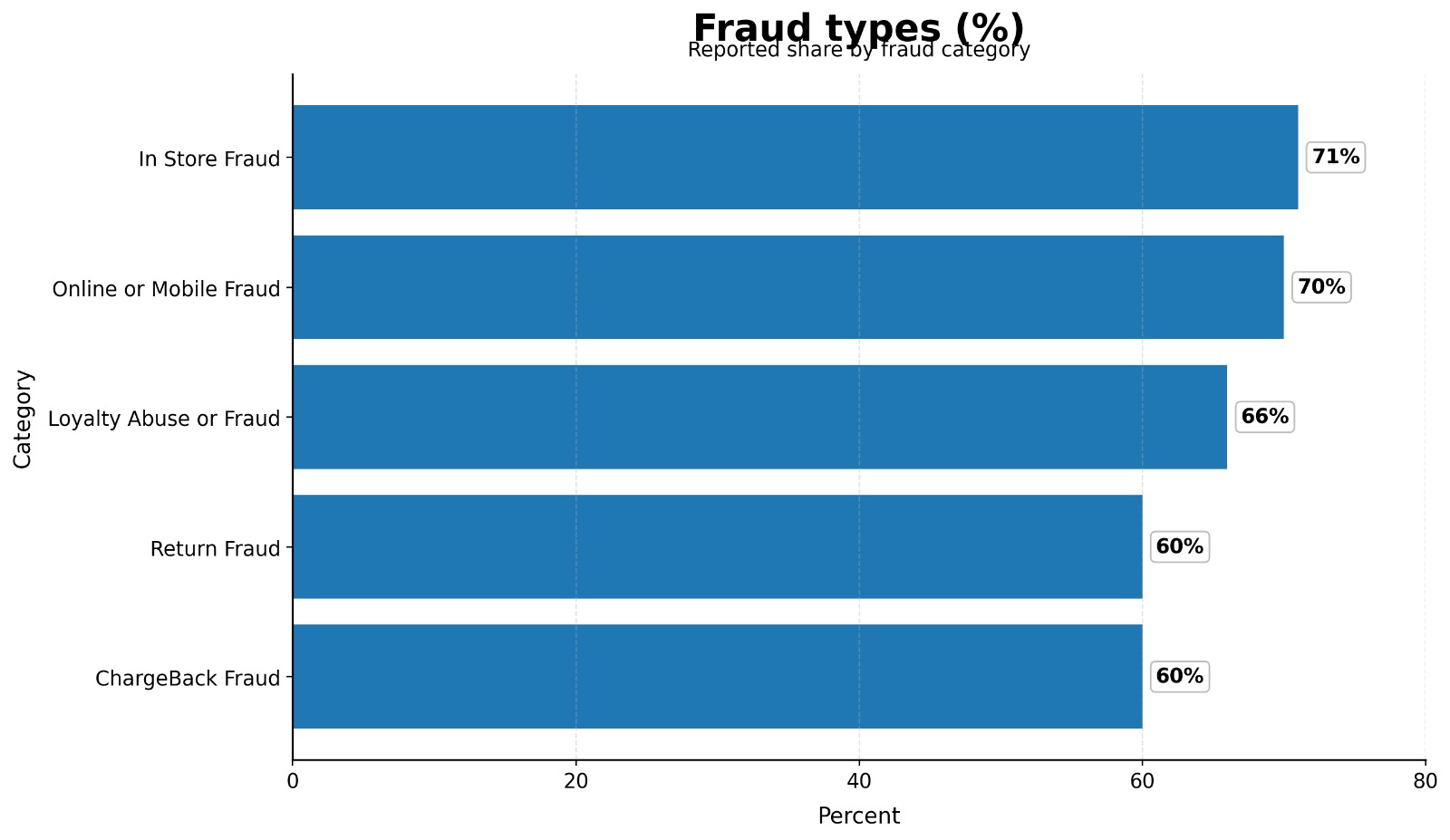
More than 50% of respondents stated their departments had direct or indirect oversight for in-store fraud (71%); online or mobile fraud (70%); loyalty abuse or fraud (66%); return fraud (60%); and chargeback fraud (60%). The holistic approach is timely; 52% of respondents have seen an increase in e-commerce fraud in the past year, which includes the capabilities of buy online, pick up in store.
In Store Fraud, Online or Mobile Fraud, Loyalty Abuse or Fraud, Return Fraud, ChargeBack Fraud
Multiple retail security guard companies use different systems for the collection and maintenance of data. In today’s world, data is everything. Different retail security companies use different reporting systems, which can lead to inconsistency in data.
Fragmented reporting systems: Each vendor offers its own system for tracking the situations, generating reports, and analysing the crime data. This leads to gaps in the data of multiple retailers, as each location may report data differently or have incomplete records. Inability to spot trends: without a standardized system, it’s hard to manage the retailers’ spots at the different locations. Lack of visibility prevents businesses from understanding the full-scale problems like ORC, theft, or violence. Proving ROI on safety investments: Fragmented data makes it harder to measure the security strategies. Retailers struggle to prove the return on investment (ROI) for security spending, as the data cannot easily be consolidated to assess the impact of improved safety measures.
Without clear, unified data, businesses cannot effectively track and prove the success of their loss prevention strategies, nor can they make informed decisions about where additional resources are needed.
The Case For Security Vendor Consolidation
With the modern world, threats also require a modern solution. This is the reason many retailers are reconsidering the approach and exploring security vendor consolidation. Consolidation means building consistency. By consolidating security vendors, retailers can: Consolidation standardised the safety measurement across all the locations to make sure that every employee and customer is safe. Streamline operations by dealing with selective vendors, making coordination and reporting easier.
Having all data in one spot eliminates the chances of blind spots.
Improved security professional training and de-escalation strategies.
Reduce the chances of shrinkage by creating a consistent security presence across all the locations.
Finak Words
It’s really hard to manage the business and security within an affordable budget. Guard Services USA delivers tailored solutions that meet the unique demands of retail environments. Our security team is trained to enhance the customer experience while actively determining theft, preserving store operations, and minimizing financial losses across all types of retail settings. Guard Services USA provides services across 100,000+ locations.
We understand the unique complexities and security challenges that retail business faces, and we provide customised solutions for your business.

Frequently Asked Questions About Los Angeles Security Guards
What Are The Hidden Costs Of Using Multiple Security Vendors?
Hiring multiple security vendors creates non-standardized training, a separate repeating system, and data gaps. Hourly rates may be lower, but additional charges for monitoring and coordination time reduce savings. After a time, fragmented security increases, shrinks, weakens the protection, and raises overall long-term business costs.
How Does Vendor Fragmentation Impact Employee Safety?
Vendor fragmentation leads to different training standards and uneven conflict resolution skills across locations. When the guards respond differently to incidents, differing situation resolution can cause issues. This action increases the workplace risks, creates fear among employees, and reduces confidence in the store’s safety
Why Does Security Vendor Consolidation Reduce Shrinkage?
Security vendor consolidation creates standardised training, advanced protocols, and uniform protective strategies across all locations. ORC exploits weak security patterns. When retailers apply the same security presence everywhere in this way, criminals find fewer gaps to target. Consolidation of security vendors reduces the theft risk, preventing escalation and ultimately lowering the shrink rates.
What Data Blind Spots Come From Fragmented Security Vendors?
Fragmented security vendors use old, separate reporting systems that make it difficult to combine and analyse data across locations. This prevents retailers from identifying trends in theft, fraud, and violence. Without unorganised data business struggle to measure ROI, detect organised retail crime patterns, and make informed, strategic security decisions.