
Executive Time Value
Why Vendor Consolidation Matters
Introduction
In the past, organizations didn’t give much thought to security vendor consolidation. With the threat landscape continually expanding and new cyberthreats emerging every day, company leaders typically wouldn’t bat an eye at bringing on a wide range of security suppliers. A 2022 Gartner survey reported that 75% of organizations will pursue security vendor consolidation over the next few years to improve their security posture.
In retail, we negotiate on everything, uniform costs, guard hourly rate, and technology licensing. Even in retail, even a $2 per hour reduction in the security can feel like a win across hundreds of locations.
But here’s the thoughtful question:
What if the most expensive line item in your retail security budget isn’t guards, cameras, or software but executive time? Think about the cost of a VP or SVP overseeing retail security and asset protection. Salary bonus benefits, travel, and opportunity costs of these outweigh the dollar per hour. Now multiply that by the weekly vendors’ calls, contract renewals, and Quarterly business reviews. Saving $2/hour on a fragmented guard program may look cheaper, but the hidden cost gives tough times for leadership.
Complexity At Scale: 500–2,000 Locations = Contracts, Qbrs, Performance Reviews Multiply
Retail business security is not simple. If you operate your retail business in 500 to 2,000 locations and choose a fragmented security system, you will get a real headache with these factors:
- Multiple regional guard companies
- Separate incident reporting systems
- Different escalation procedures
- Disparate KPIs
- Inconsistent training standards
Meanwhile, the shrink ratio will continuously rise. Average retail shrink reached 1.6% of sales in 2022, $112.1 billion in losses, up from $93.9 billion the prior year.
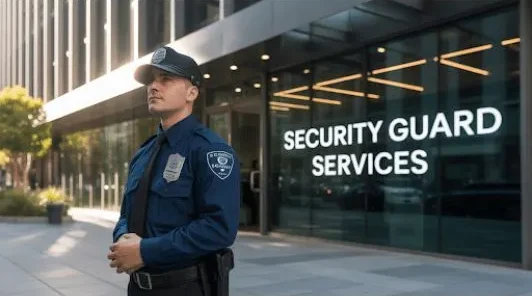
Approximately 65% of shrinkage is driven by theft, with external theft, including organized retail crime (ORC), accounting for roughly 36% of total loss.
Shoplifting incidents rose 93% in 2023 compared to 2019 levels, with dollar losses up 90%. From 2022 to 2023 alone, incidents increased by another 26%. In markets like Los Angeles and New York City, shoplifting remains dramatically elevated over pre-pandemic baselines. Under this pressure, organized retail crime pressure on LP teams is nonstop.
The Security Leadership Tax
The invisible operational hidden costs of a fragmented multi-vendor retail security environment, is often referred to as the security leadership tax. In a typical moment, a retail security executive may review three separate guard vendors’ performance, reconcile conflicting incident data formats, attend multiple QBRs built around the different side decks and KPIs. Time is everything, and in this way, you will invest most of your time in the inspection of all of this.
On the other side, if we look at the reality of today, 73% of retailers report shoplifters are more violent than a year ago, and 91% say they are more violent than in 2019. Incidents involving threats or violence have increased 42% year over year, while weapon involvement has risen 39%. Eighty- four percent of retailers say violence during a crime is a top concern, and organizations consistently rank providing a safe workplace for associates and a safe shopping environment for customers as their number one priority. These are the serious issues that demand real attention of the leadership, if the leadership calendar remains full with these fragmented issues it will create serious issues in the business security.
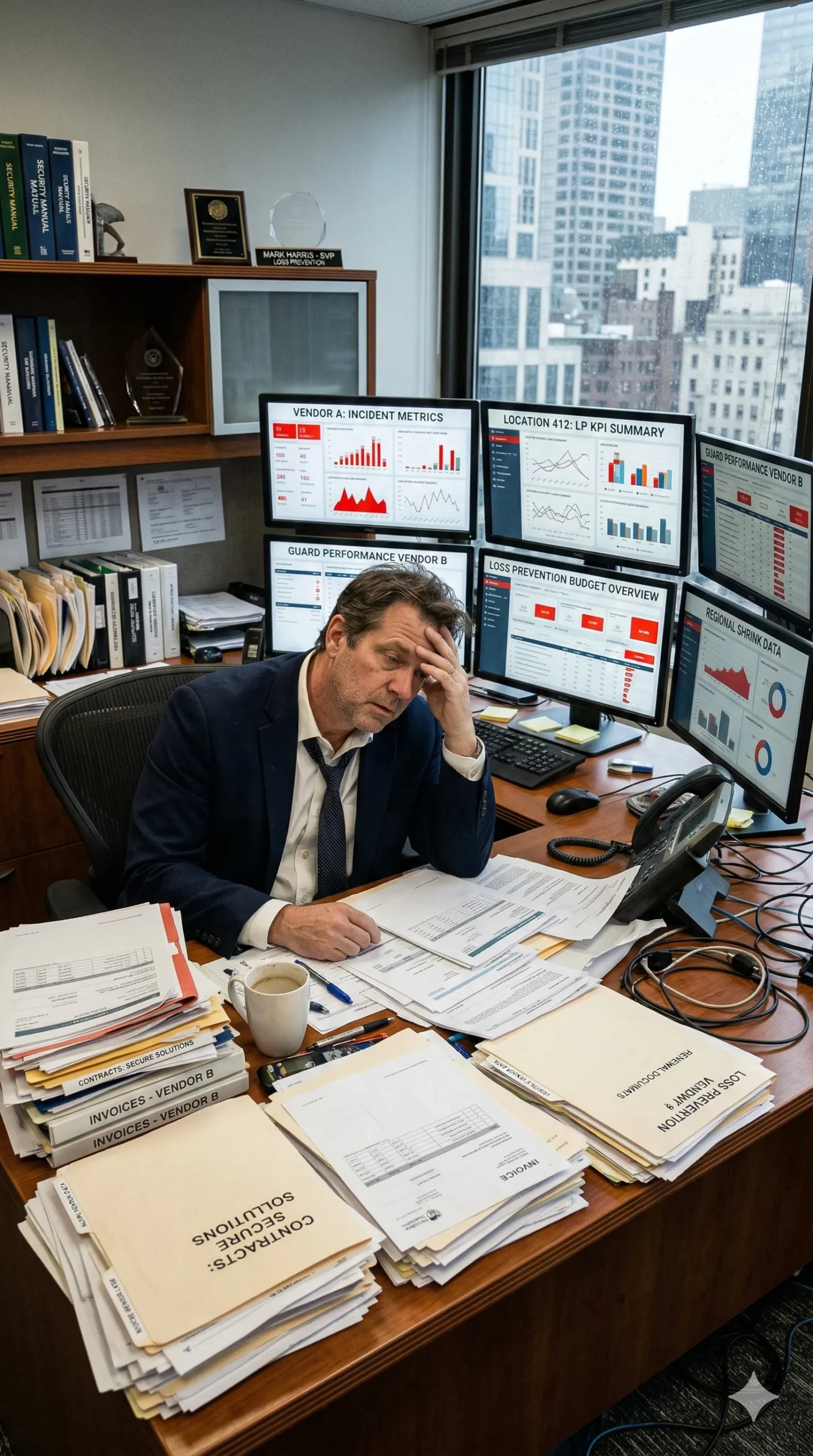
Time Not Spent On Safety
Every hour leadership spends dealing with invoices is an hour not spent preventing problems, that is the point where differences start.
While 53% of retailers increased workplace violence training budgets and 71% expanded safety investments, effective prevention requires more than funding. It takes an HR partnership, behavior analysis, and board-level reporting. In this way leaders remain busy in managing fragmented vendors. Retail security leadership time is too expensive a tool.
Violence is not an issue in the workplace. 93% research shows it hurts hiring and retention, and 69% see recruiting challenges in the safe areas. Loss prevention aligns with HR to improve safety and provide clear guidance on how to respond to incidents. Crime is also shared with the experience of the customer. 76% report negative impacts, 45% reduced hours, 30% changed product selection, and 28% closed locations. Security now affects the brand and location both, but fragmented management keeps owners tied up managing staffing issues and administrative tasks.

The Consolidation Payoff: One Partner, One System, One Escalation Ladder
Retail security is becoming increasingly complex day by day due to the advanced OCG. Multiple vendors, a disconnected system, and an unmanageable process create a gap in the security data. Consolidation comes with the smarter strategies. Security vendor consolidation benefits are countless.
One Dashboard: Fragmented vendors give a tough time to the retail security program management. Consolidation provides a clear report on the dashboard across all the locations. By using standardized KPIs, the vendor makes sure that every location’s security measures are consistently followed and produce accurate reports. Through this approach, it creates a single source of truth for the incident data, minimizes confusion, and enables more informed decision-making.
One Partner: Consolidation means Commitment. By consolidation, leaders gain a single point of ownership instead of managing the fragmented, overlapping issues. Communication becomes simple. Service levels become clearer. Everyone in the consolidation works in a network, and the outcome comes at the same time.
One System: Consolidation comes with one system that creates visibility. When data is scattered in different systems, insight can become buried. Data collecting and management, analysed by a single centralized system creates a clear security system. In this way it is easy to measure the risk of danger, and the leader also saves their team for other important tasks.
One Escalation: The escalation drives the clarity. In the consolidation of security guard services for retail stores, exactly know exactly what to do and who to contact in serious situations. A standardized escalation network reduces confusion during high stress incidents. It also makes sure consistent reporting to the senior leadership for better governance.
Executive Kpis Enabled By Consolidation
In the retail business dealing with security is not a simple thing. To understand clearly the safety risk in relation to store activity, tracking violent incidents per 1,000 transactions is a clear indicator of safety. Simple count of incidents, how many incidents happen and how frequently they happen based on customer traffic and sales volume. This allows fair comparisons between busy and less busy stores and helps determine which stores need additional guard coverage, training, and other measures that may be required.
In the retail multiple business, safety metrics are also important. Security guards play a vital role in protecting employees from workplace injuries, threats, and aggressive behavior. Monitoring factors at regular intervals, like injury reports, lost workdays, and near miss incidents
help to figure out the patterns and high-risk situations. When the violence incident ratio increases, stores often experience high lost workdays, lower morale, and increased turnover. Standardized guarding, strong observation, and quick response help prevent the escalation and create a safer workplace.

Customer experience (CX) is directly associated with how safe shoppers feel inside the store. Violent or disruptive incidents can depress Net Promoter Score (NPS), also drop transactions, and damage the store name. If shoppers witness uncomfortable situations and feel unsafe, they obviously avoid the store, which in turn impacts the sales. By maintaining a secure, controlled environment, security guards are involved not only to safeguard, but also to build customer trust and loyalty.
At the leadership level, these safety measurements build strong risk management and ensure the protection of the employees, customers, and impact overall business performance. When shoppers feel safe inside the shop that also brings the brand in an upward direction.
Final Words
If you had 5 – 10 hours back each week, how would you use that time? Would you spend it dealing with the security vendors’ rates and contracts, or would you focus on making your business stores safe for employees and customers? Time is the most precious and valuable thing in the retail business. But when the leader is tied up with the office paperwork, they have less opportunity to address real safety challenges. Use those hours to strengthen security strategies, improve guard services, and review incident reports. Instead of reacting to problems, you can invest in creativity and store-level engagement. The real thing is not to save time, it’s about using that time to create a safe, more secure environment that protects people and the brand name.

Frequently Asked Questions About Los Angeles Security Guards
How Much Executive Time Do Fragmented Security Vendors Consume?
Fragmented security vendors take notable executive time. Leaders are tied up with long calls, contract renewals, and invest a lot of time in business reviews. They check multiple reports and formats. This procedure reduces the time for the safety strategy. Across multiple stores, the hidden security leadership costs more than guard or software charges.
What Are The Benefits Of Security Vendor Consolidation For Retail?
Consolidation simplifies management as with one partner, one dashboard, and an escalation ladder. It minimizes the confusion, standardizes KPIs, and improves the reporting system. Executive time and resources both. Through this, security vendor communication becomes clear, and consolidation also reduces the leader’s burden.
How Does Vendor Consolidation Improve Workplace Violence Prevention?
Consolidation makes sure that there is standardized training, stable guard coverage, and faster incident response. A clear escalation procedure reduces the confusion during high risk events, so executives can focus on the prevention rather than the paperwork. Centralized data helps identify high-risk stores and patterns, reducing serious accidents and creates a safe environment for the shoppers and employees
What Kpis Should Executives Track For Security Vendor Performance?
Executives should track violent incidents per 1,000 transactions, guard response time, and training completion rates. Other KPIs include lost workdays, near miss reports, and how much time taken in incident resolution. Customer experience metrics also matter such as NPS and repeat visits. These help to measure the safety, efficiency, and impact on employees or shoppers.