


Protecting PUBLIC-FACING bUsinesses
wITHOUT dISRUPTING THE Customer Experience
Protecting a public-facing business means strengthening security around the way customers, employees, and vendors already use the property.
For restaurants, hotels, entertainment venues, and other high-traffic locations, the goal is not to make the site feel closed off. It is to identify where risk is concentrated, define how people should respond, and put appropriate safeguards in place without interfering with normal operations.
That balance matters when evaluating commercial security guard services. A guard presence can support entrances, parking areas, access points, incident response, and other needs, but it works best as one part of a broader plan that also covers employee communication, escalation procedures, and emergency preparation.
The August 2026 shooting at an In-N-Out in Twin Falls, Idaho, is one recent reminder that serious violence can reach ordinary customer environments. The lasting operational question is broader: how can a business improve its security posture without undermining the experience customers are there to have?
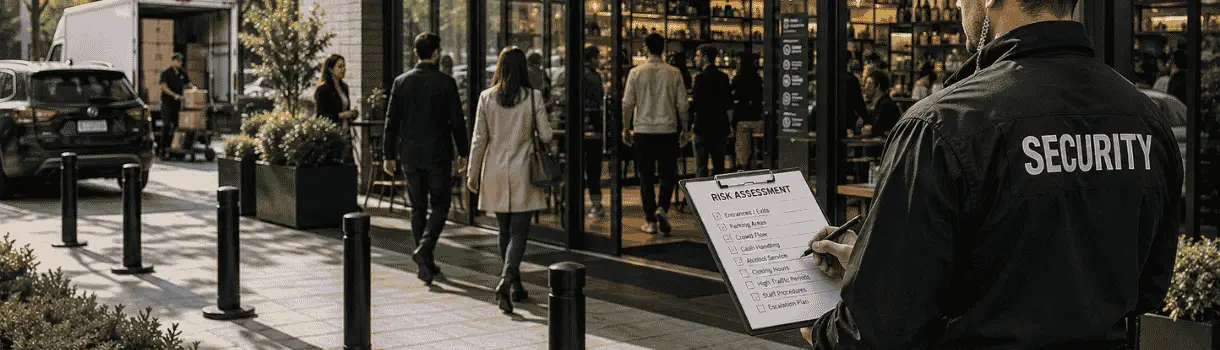
Start With the Location’s Actual Risk Profile
Security measures should reflect how a specific location operates rather than a generic idea of what “more security” looks like. A late-night restaurant, a hotel lobby, a seasonal event, and a busy retail location may all face different patterns of traffic, conflict, and exposure.
The result should shape where security is positioned, when coverage is needed, and what situations require escalation. It may also show that some areas need a visible presence while others benefit more from patrols, monitoring, or stronger employee procedures. The objective is proportionality, not maximum visibility everywhere.
Design Security Around the Customer Journey
Public-facing security becomes disruptive when it ignores how customers normally move through the business. A measure that creates confusion at the entrance, slows service unnecessarily, or makes ordinary visitors feel as though they are being treated as suspects can create a new operational problem while trying to solve another.
Security planning should therefore follow the customer journey from arrival to departure. That means understanding parking and exterior approaches, entrances, waiting areas, counters, elevators, restrooms, event spaces, and other high-traffic or restricted areas.
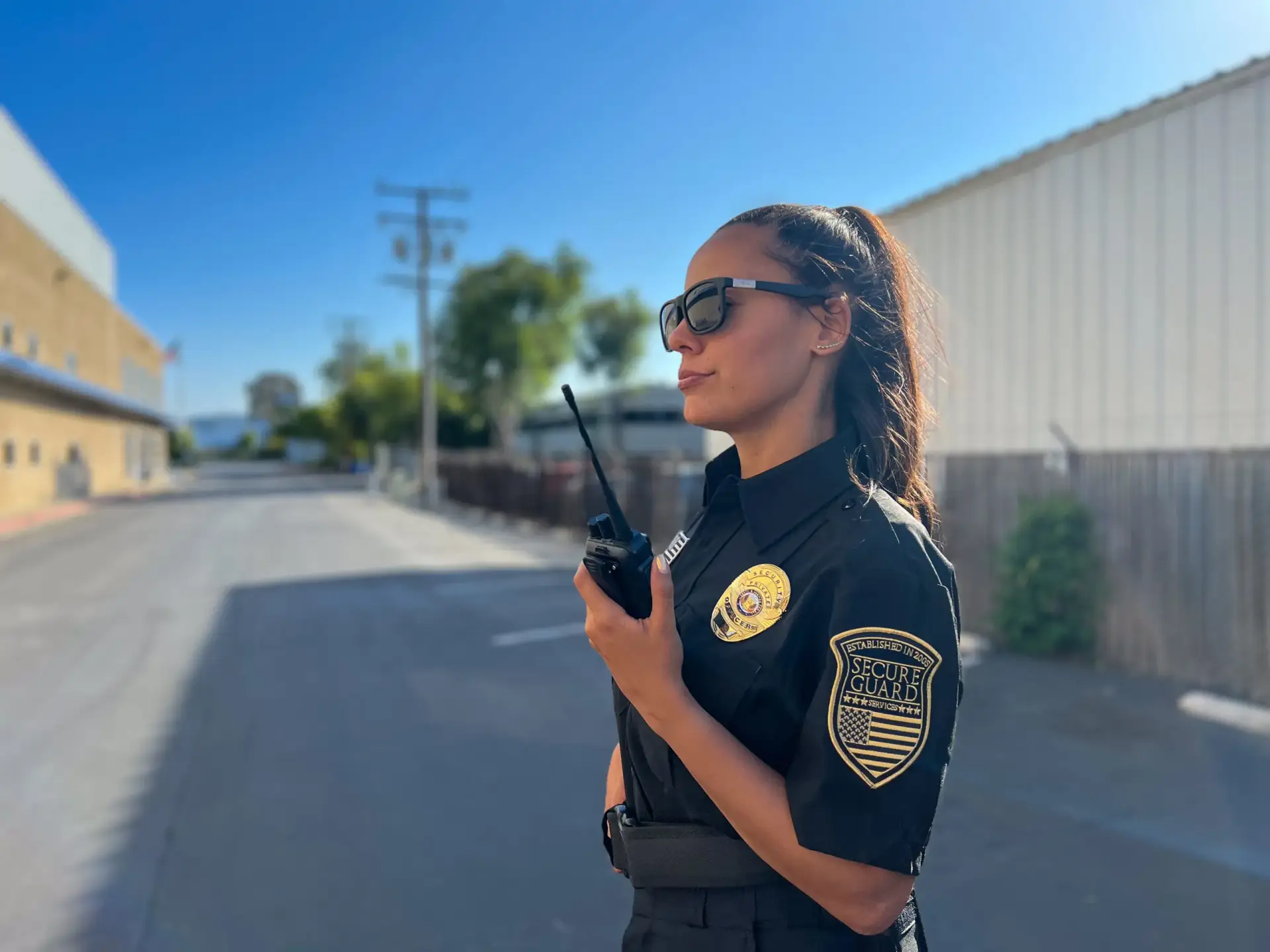
The right placement depends on the environment. In some locations, a visible officer near an entrance may provide useful presence and immediate support. In others, a more mobile or lower-profile assignment may better preserve normal flow while still providing coverage.
Guard Services USA’s approach includes site-specific coverage planning and post assignments, which reflects the broader principle that security should be built around the operating environment rather than imposed on top of it.
Make Customer-Facing Conduct Part of the Security Plan
Professional conduct is not separate from security performance in a guest-facing environment. Security personnel may be among the first people a customer sees, and their communication style can affect whether an ordinary interaction stays routine or becomes unnecessarily confrontational.
ASIS Security Management has noted that concierge-minded security roles combine vigilance with communication, guidance, and awareness of who belongs in a space. Its retail workplace-violence guidance also emphasizes calm communication, distance, situational awareness, and defined protocols when a situation begins to escalate.
That does not mean every interaction should be handled as a customer-service exercise. Security personnel need clear boundaries for when to continue verbal engagement, when to bring in management, when to create distance and when to contact law enforcement or emergency services.
CISA’s conflict-prevention resources similarly frame de-escalation as a tool for navigating suspicious or potentially escalating behavior, not as a guarantee that every situation can be resolved verbally.
Build Communication and Escalation Before an Incident
A security plan is weaker when the people involved are expected to improvise through a situation under pressure. Employees, managers, and security personnel should understand who is responsible for recognizing a problem, reporting it, escalating it, and communicating with others.
For public gatherings, CISA recommends developing incident response plans, training staff, coordinating with local authorities, and establishing ways to report concerns. Those principles translate well to restaurants, hospitality properties, and other public-facing businesses even when they are not hosting a large formal event.
The practical questions are straightforward. Who calls 911? Who alerts site leadership? Who has authority to restrict access or close an area? How will employees be told to evacuate, shelter, or redirect customers? What information should security document after the event?
Clear answers reduce ambiguity. They also make it easier to train new employees, adjust coverage, and review whether the response process worked as intended.
Adjust Coverage When Conditions Change
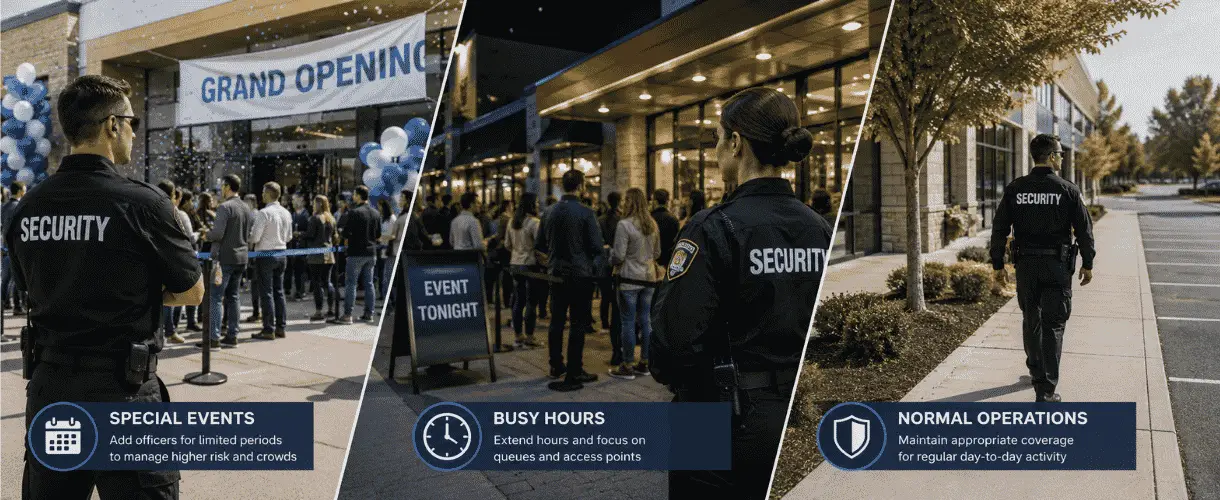
Security needs are rarely static. A location that operates normally most of the week may face a different risk profile during a grand opening, holiday weekend, major local event, late-night promotion, or period of unusually heavy traffic.
Coverage should be able to change with those conditions. That may mean adding an officer for a limited period, extending hours, covering a normally quiet exterior area, or assigning more attention to a queue or access point during an event.
The same logic applies across multi-location businesses. A uniform national policy can create consistency, but individual sites still need room for local risk, traffic, and operating conditions. The stronger model is a consistent framework with site-specific deployment decisions rather than identical coverage everywhere.
Measure Security Through What Can Be Verified
No security program can guarantee that it will prevent a violent incident. Buyers should be cautious with claims that turn security presence into a promise of prevention.
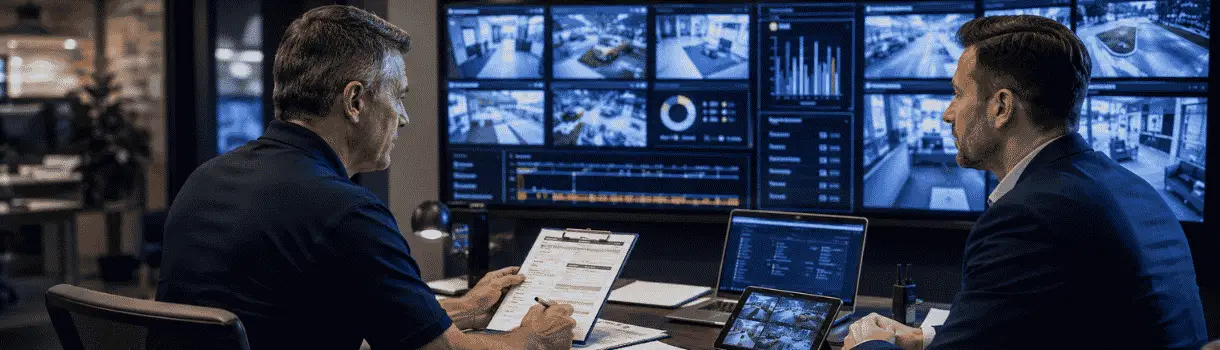
What can be evaluated is execution. Useful evidence includes whether scheduled coverage was filled, whether required patrols or checks occurred, how quickly an issue was escalated, whether incident reports were completed, and whether supervisors followed up when something changed.
This phase is where documentation matters. Activity logs, incident reports, post instructions, escalation records, and service reviews give management something concrete to examine. They can reveal repeat problem areas, recurring time periods, gaps in communication, or coverage that no longer match the site.
For a public-facing business, that feedback loop is especially important because security has to keep adapting without creating unnecessary friction for customers.
Security planning should therefore follow the customer journey from arrival to departure. That means understanding parking and exterior approaches, entrances, waiting areas, counters, elevators, restrooms, event spaces, and other high-traffic or restricted areas.
The right placement depends on the environment. In some locations, a visible officer near an entrance may provide useful presence and immediate support. In others, a more mobile or lower-profile assignment may better preserve normal flow while still providing coverage.
Guard Services USA’s approach includes site-specific coverage planning and post assignments, which reflects the broader principle that security should be built around the operating environment rather than imposed on top of it.
Five Questions To Ask Before Expanding Security Coverage
Where are the highest-risk points in the normal customer and employee journey?
What communication and de-escalation expectations apply to customer-facing security personnel?
What situations trigger escalation to management, law enforcement, or emergency services?
What activity, incident, and follow-up documentation will management be able to review?
How can coverage change during events, high-traffic periods, or other heightened-risk conditions?
What Public-Facing Business Leaders Should Focus On
The strongest security posture is not necessarily the most visible one. It is the one that matches the actual risk profile of the location, fits normal customer flow, gives employees and security personnel clear responsibilities, and produces enough documentation to evaluate how the program is working.
Public-facing businesses do not have to choose between taking security seriously and maintaining a welcoming environment. They do need to design the two together. Organizations reviewing current coverage can request a security assessment from Guard Services USA to discuss site-specific needs, operating conditions, and coverage options.
Frequently Asked Questions
What security measures should retail stores take during election season?
Follow these six steps to make a robust security plan during the election year.
- Conduct site-by-site risk assessments.
- Increase guard presence.
- Adjust staffing during peak times.
- Brief guards on de-escalation protocols.
- Coordinate with local law enforcement.
- Monitor conditions in real time.
How do election protests affect multi-location retail operations?
Election protests cause uneven disruptions across locations, affecting access, staffing, and customer flow. High-density areas and locations near civic buildings typically experience the most operational strain. For example, a store near a downtown courthouse may need guards briefed to manage sidewalk congestion and maintain clear entrances if a demonstration forms nearby.
When should retailers begin election security planning?
Retailers should begin planning in early Q3 and complete core assessments by September to be adequately prepared before early voting and Election Day. Reviewing potential security scenarios in advance allows teams to evaluate coverage options methodically, rather than making rushed decisions under pressure.
How do you brief security guards for politically sensitive environments?
Brief guards using location-specific scenarios, clear rules of engagement, and defined communication protocols. Emphasize de-escalation, awareness, and strict neutrality. For example, a guard working near a public gathering area should be prepared to monitor a peaceful protest without engaging, while knowing exactly when behavior crosses the threshold for escalation.
Stay Ready with Election Year Security Planning
One advantage of planning staffing, logistics, and crowd control during an election year is the predictability of the timeline: you know when early voting begins, when national days of protest may occur, and exactly when Election Day will take place.
Start building a plan now to support 24/7 operations across your locations, including clear emergency protocols and a focus on efficient execution. Contingency plans for every possible scenario should be in place by September. Election year security planning can also serve as a template for subsequent annual safety reviews. Guard Services USA, a qualified guard services partner, can accelerate this process significantly.