Visit Our Sister Company


How to Evaluate a Commercial Security Guard Company
What Enterprise Buyers Actually Look For
Security guard company evaluation criteria are the operational checks an enterprise buyer uses to determine whether a vendor can staff, supervise, document, and escalate consistently across a real portfolio, not just present a polished capability sheet.
That is the gap many RFPs miss when evaluating a commercial security partner. They compare hourly rates, footprint, and headcount, then act surprised when the program breaks down at the store, property, or hospital level.
For experienced buyers, the real question is whether the vendor can respond effectively when coverage fails, an incident turns violent, or an after-hours escalation occurs.
Start With What Standard RFPs Usually Miss
Buyers benefit when they evaluate geographic reach separately from operational discipline, service quality, and field outcomes.
Most enterprise reviews overweigh price, geographic reach, and staffing promises. Those factors matter. But they do not show whether a vendor can keep licensing current across jurisdictions, train officers for site-level risks, prove that patrol expectations were met, or escalate quickly when an incident turns serious.

Verify Licensing and Insurance By Jurisdiction
Licensing compliance means confirming that both the company and deployed personnel meet the rules of the states where you operate, with current documentation behind the claim. Private security regulation is handled at the state level, and requirements vary by jurisdiction
For instance, Texas regulates private security through the Department of Public Safety. California regulates guard registration through BSIS, and California also requires licensed private patrol operators to maintain at least $1 million in general liability insurance. Georgia maintains a dedicated board for private detective and security agencies.

At the enterprise level, verification should go beyond a certificate in a sales folder. Ask for state-by-state licensing status, proof of renewal controls, insurance limits that fit a multi-location program, and workers’ compensation documentation by jurisdiction.
Because the U.S. Department of Labor points employers to the appropriate state workers’ compensation authorities, buyers should request jurisdiction-specific documentation when assessing potential partners.
Evaluate Training and Reporting as a Performance System
Training quality means whether officers are being prepared for the incidents your sites actually experience, not whether the vendor can list a few generic onboarding modules.
A meaningful program should include site-specific post orders, escalation thresholds, incident-writing standards, and scenario work tied to the environment. California sets baseline security guard training requirements, while OSHA identifies workplace violence as a real operational hazard and emphasizes prevention, reporting, and worker training in high-risk settings.
You should press for a clear explanation of how those expectations are carried through into post-specific preparation, day-to-day supervisor oversight, and the overall quality of reporting.
Demand Technology That Proves Work Happened
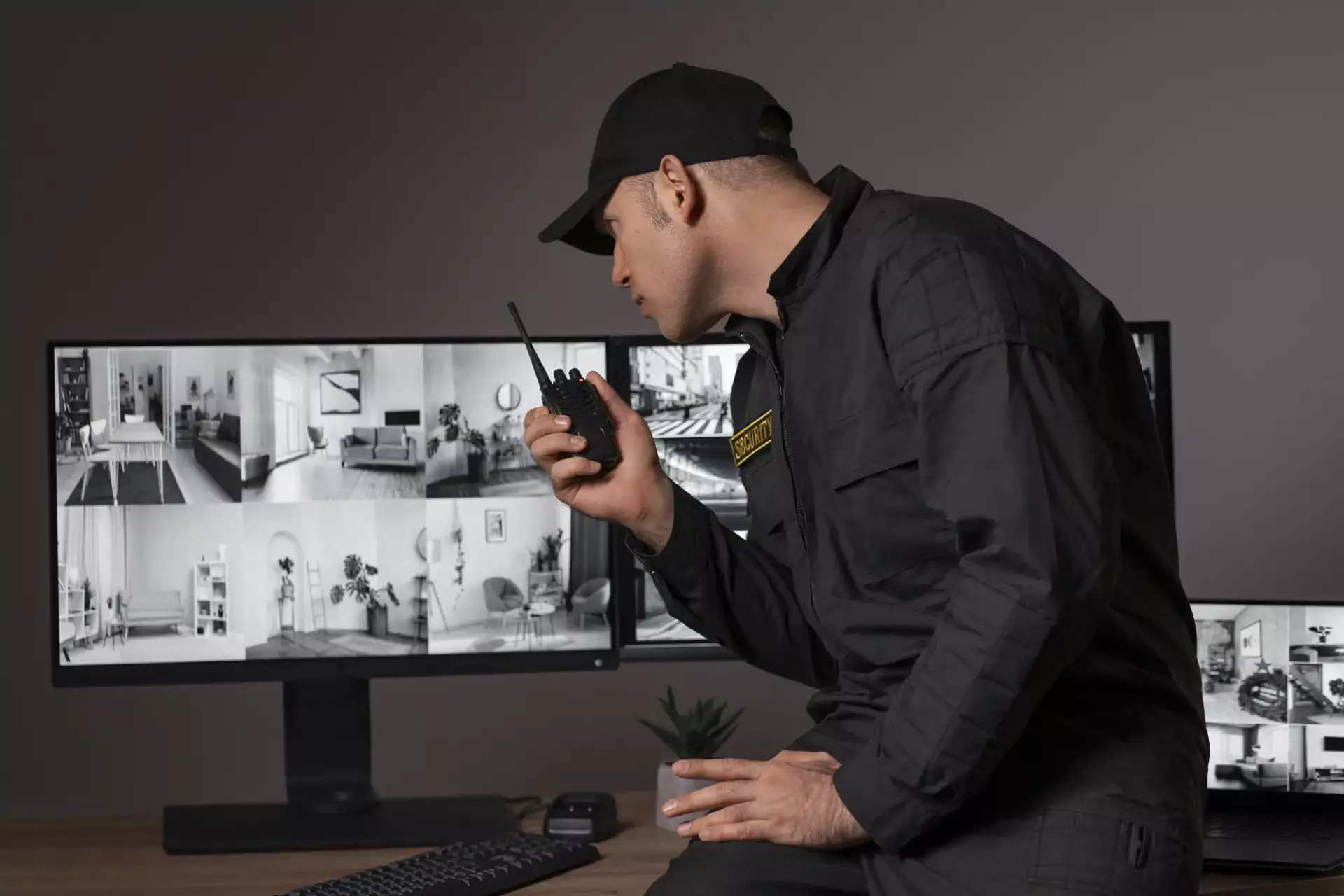
Technology accountability means using systems that create verifiable evidence of activity, response, and reporting rather than relying on verbal updates after the fact.

Enterprise buyers should expect GPS-verified check-ins, time-stamped incident logging, and client access to usable reporting. Some RFPs require access to incident reports, activity logs, and time reports, with many having a preference for vendors utilizing a GPS-based monitoring system.
A federal performance work statement likewise requires incident reports to be provided as soon as possible rather than deferred to a later shift. Those are solid benchmarks for buyers trying to separate proof-of-service from marketing language.
Five Questions To Ask In Any Vendor Review
How do you track licensing, insurance, and workers’ compensation compliance across every state where we operate?
What does site-specific training look like before a new location goes live?
What technology proves the officer completed the required work?
Who owns escalation when coverage fails or a serious incident happens?
What contract remedies apply if service levels are missed?
What Enterprise Buyers Should Focus On
For buyers evaluating a commercial security guard company at enterprise scale, the real differentiators are current jurisdiction-level compliance, post-specific training, verifiable reporting, and contract terms that protect the client when execution slips.
The right vendor evaluation process surfaces the gap between what a security company markets and what it can actually deliver. Most of that gap appears in training standards, technology accountability, and documentation discipline, not in pricing slides or geographic coverage maps.